



Wondering if brakes are covered under warranty? Learn what factory and extended car warranties cover and when brake repairs may be included.
Wondering if brakes are covered under warranty? Learn what factory and extended car warranties cover and when brake repairs may be included.
You slow down at a stop sign, and the screech is about as pleasant as nails on a chalkboard. There’s no denying that your brakes need attention, but whose pocket is taking a hit when you take your car in? The question on your mind is likely: Are brakes covered under warranty?
The answer is that it depends. The brake system is made up of components, some of which are designed to wear with use and therefore aren’t covered. Others are built to last. Depending on your coverage, those parts may be eligible for warranty coverage.
Rather than asking whether brakes are covered under warranty, the better question is which brake parts are covered. And following that: Are you eligible for that coverage?
There’s a lot of confusion around warranties overall. Many drivers misunderstand coverage terms, owner responsibilities, and the definition of a vehicle breakdown. To resolve some of that confusion, it’s worth emphasizing what a warranty really is.
The Federal Trade Commission defines a warranty as “a promise to fix certain defects or malfunctions during a specific timeframe after you buy a vehicle.”
The reason certain items, like brake pads, drums, and rotors, are typically excluded is that they’re designed to wear down through use. That's not a defect.
Most brake pads last between 30,000 and 70,000 miles before they need to be replaced. It’s an inevitable, though inconvenient, repair. Rotors, another consumable component, start to wear down over time as they grind into the brake pads. Replacing them isn’t negotiable; failing brake rotors can cause uneven braking pressure and unpredictable braking, in addition to brake noise.
Other brake components, however, are vital, non-wearing components. Examples include the master cylinder and hydraulic control unit.
Those components are often eligible for coverage, but it depends on whether your factory bumper-to-bumper warranty is still active or whether you have an extended warranty that includes those components in its coverage.
That brings us to another important consideration: the distinction between a factory warranty and an extended warranty, which is technically a vehicle service contract (VSC). As you’ll see, there aren’t major differences in how brakes are covered.
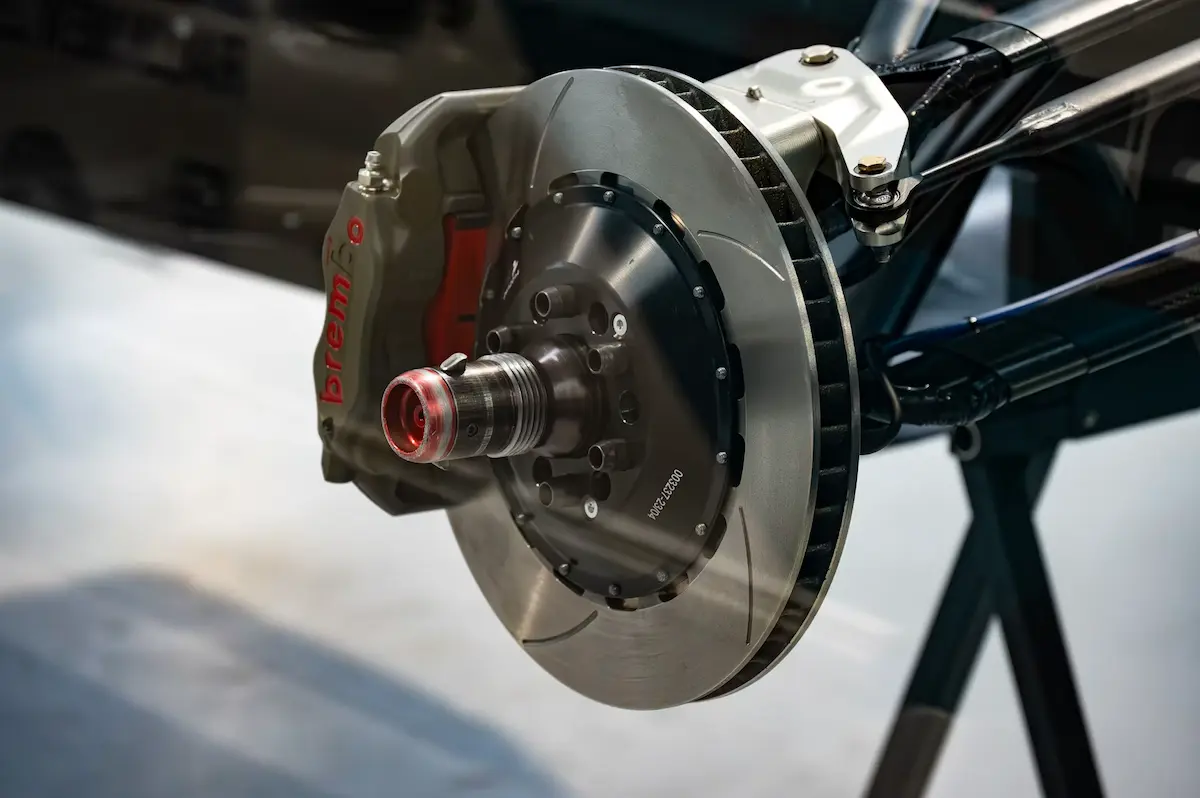
We’ve established that brake components that fail due to a manufacturing or workmanship fault may be covered, whereas those that fail because of normal use won’t be.
However, for eligible brake components to be covered under factory warranty, your limited bumper-to-bumper warranty needs to be active.
If you bought your vehicle new, you would’ve driven off the lot with a factory warranty consisting of a limited bumper-to-bumper plan and a powertrain plan.
The powertrain warranty covers only the essential parts that make a car move, such as the engine, transmission, and drivetrain. The braking system is not included.
The bumper-to-bumper warranty is more comprehensive. It covers the powertrain, as well as most components between the front and rear bumpers (but not the bumpers themselves). Brake parts that qualify for coverage will be included under bumper-to-bumper coverage.
Comprehensive warranties are typically exclusionary, meaning the contract will cover all components except those specifically listed as exclusions. One of the most common exclusions across all manufacturers is wear-and-tear parts like brake pads, rotors, and drums.
As indicated in the FTC’s definition above, factory warranties have a limited lifespan. It’s common for bumper-to-bumper warranties to lapse before powertrain coverage. The exact terms will depend on the manufacturer.
A common year and mileage term you’ll see is 3 years/36,000 miles of bumper-to-bumper protection and 5 years/60,000 miles of powertrain coverage. Honda, Toyota, and Ford are some big names that use this structure.
However, other manufacturers have longer durations and higher mileage caps. Hyundai, for example, has a 5-year/60,000-mile bumper-to-bumper and a 10-year/100,000-mile powertrain warranty. (Note that the powertrain is reduced when a new Hyundai is sold to a second owner.)
Once the factory bumper-to-bumper warranty lapses, you won’t be eligible for coverage anymore, even if you have a valid brake-related claim. That’s where an extended warranty comes in.
If your factory bumper-to-bumper warranty is still active, you can purchase extended coverage from the vehicle manufacturer. If you’re not sure about the status, you can check using a VIN-based tool.
If your warranty has lapsed, you can still purchase an extended warranty from a third-party provider. These agreements typically won’t provide coverage for wear-and-tear components like brake pads, but they may protect against other brake-related breakdowns.
As with factory warranties, it depends on the component. Extended warranties typically exclude routine maintenance, which includes brake inspections. However, with extended warranties, the level of coverage is an important factor to consider.
Many third-party providers and manufacturers have tiered plans that build on each other. These are the three general levels of coverage you’ll find across the board:
As with factory warranties, brake pads, rotors, drums, and other wear-and-tear items will usually be excluded. If a component like the ABS module isn’t on the list of covered parts, or if it’s explicitly listed as excluded, then it won’t be covered.
If you are in the process of comparing providers, read the contract carefully. The same goes if you already have coverage. Understanding what’s covered and what can lead to a denied claim on an eligible component can save you a lot of headaches down the road.
Not many maintenance plans will cover brake repairs or part replacements.
If you’re unfamiliar with the term, a maintenance plan is a product that’s designed to cover routine servicing and wear-and-tear repairs. Like a warranty, it’s active for a specific duration and mileage.
Manufacturers like Hyundai and Toyota have maintenance plans that come with new vehicles, and they can typically be extended. It’s not a given that these contracts will cover repairs to wear-and-tear brake components, though.
Hyundai, for example, doesn’t cover brake pad replacements or other consumable brake items under either its Hyundai Complimentary Maintenance Program or its pre-paid maintenance plans.
ToyotaCare, the maintenance program that comes with new Toyotas and is active for 2 years or 25,000 miles, includes oil changes, filter changes, tire rotations, and multipoint inspections. The plan covers scheduled maintenance only, so brake pad replacements aren’t covered.
Ford is an exception. Ford Protect Premium Maintenance covers routine inspections, preventative care, and normal wear-and-tear items, including brake pads and linings. The plan is available for 2 to 10 years or up to 175,000 miles, but it needs to be purchased while the factory bumper-to-bumper warranty is still active.
Endurance Warranty’s Advantage plan integrates maintenance into a standard VSC. The plan, which comes in three levels called Preferred, Plus, or Prime, pays up to $140 toward brake pad or shoe replacements. This benefit can normally only be used once during the plan’s term.
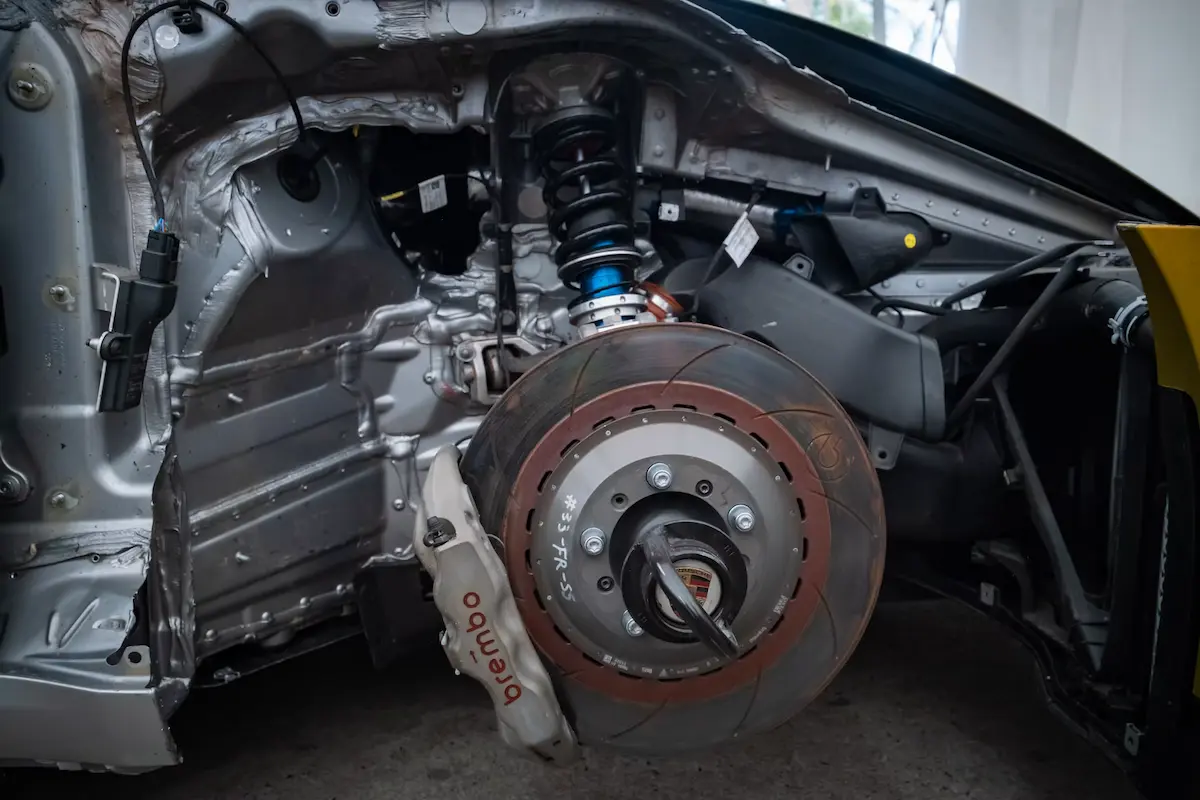
We’ve touched on this here and there throughout this article, but here’s a list of the brake parts you’ll normally find excluded from warranty coverage:
Brake fluid replacements are usually also excluded.
There are exceptions. For example, if a manufacturer defect causes excessive wear, an excluded item may qualify for replacement.
Say your vehicle has a warped brake rotor because of a manufacturing flaw, and this causes faster degradation of the brake pad. In this case, both components may be covered. Similarly, an ABS system malfunction can cause premature pad wear due to uneven braking. Because the ABS system is a covered component, the warranty may also cover the brake pads.
The contract should specify whether damage to a non-covered part by a covered part does or doesn’t qualify for coverage.
A good contract will make it clear exactly what’s covered, or if it’s an exclusionary contract, what isn’t. Brake parts that are usually covered if they fail due to manufacturing defects include:
Under factory warranty, the brake pedal assembly, lines, and hoses may be covered if they fail due to defects. These items are also commonly covered under mid- to high-tier extended warranties.
There are circumstances under which an eligible part won’t be covered. These are some reasons claims get denied:
It’s worth stressing the importance of maintenance records. Both manufacturers and third-party VSC providers are strict about this. If you don’t have written documentation to prove that you’ve followed the manufacturer’s recommended maintenance schedule for your particular car, you may have valid claims denied.
As far as car repairs go, wear-and-tear brake components aren’t necessarily the most expensive. However, in 2026, small costs add up. Although brake pad replacements are estimated to cost between $335 and $394, you may need to replace the rotors at the same time.
For a better idea of the associated costs, here are some estimates from RepairPal:
These estimates don’t factor in taxes, fees, or your location.
If you’re not sure whether your factory warranty is still in effect, this is a good time to check your coverage. Your VIN number is a great resource for this.
If it is, or if you have an extended warranty, check your contract. This is what to look for.
Start by reviewing the Definitions section. Here, you’ll discover how the provider defines a mechanical breakdown. “The failure of a covered part to perform its intended function due to a defect in materials or workmanship” is common phrasing. It means that wear-and-tear items won’t be covered just because they’re worn.
While you’re in the Definitions section, also look at how “wear and tear” and “covered component” are defined.
Next, go to the Covered Components section; if it’s a stated-component contract, the items will be listed individually and grouped under the system. Under brakes, for example, the compensating valve, power brake cylinder, and hydraulic lines and fittings may be part of the list on a mid-tier plan. There will typically also be a section that lists exclusions.
In the case of an exclusionary contract, you’ll often see a general statement asserting that the plan provides payment or reimbursement of authorized costs for the breakdown of all parts or components, except for those listed under the exclusions section.
Before putting the contract away again, review the maintenance requirements. Sometimes the contract will have a general statement about following the manufacturer’s prescribed maintenance schedule for your vehicle. Some specify that you need to follow the schedule for your driving habits and climate.
Also note any stipulations about acceptable documentation. Some providers don’t consider handwritten invoices verifiable. They’ll normally also specify what has to be on the invoice from the repair shop for it to be accepted.
Finally, make sure you understand the claims process. If your ABS system is covered and it fails, but you don’t seek preauthorization before the shop starts work, the provider may deny the claim.
Are brakes covered under warranty?
Brake pads aren’t. Rotors aren’t. Drums and shoes aren’t. The same goes for other wear-and-tear components.
But the ABS system, master cylinder, wheel-speed sensors, and more might be.
The question is less about brakes as a whole and more about which component requires replacement or repair.
If your car’s been screeching and squealing every time you slow down, don’t wait to have it checked out. The repair will likely have to come out of pocket, but leaving the issue only makes it worse. Not to mention that it’s dangerous.

Live quotes in <10 seconds
Best-price guaranteed

5K+ customers trust us


